-
![]()
![]()
International Impulses for Teaching
2025/11/26
Interview with Unite! visiting professor Zhengmao Li
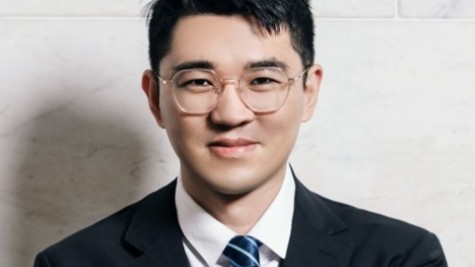
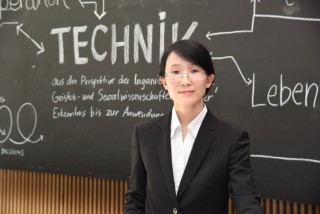
As a Unite! university, TU Darmstadt continues in 2025 to pursue the goals of the Unite! Visiting Professorship Programme: attracting outstanding international talent to strengthen interdisciplinary teaching and promote didactic innovation through global experience. With Dr. Zhengmao Li from Aalto University in Finland, the Department of Electrical Engineering and Information Technology welcomes a visiting professor whose expertise in hydrogen technologies and multi-energy systems brings valuable impulses to sustainable energy research.
-
![]() Picture: ALSVV
Picture: ALSVV![]() Picture: ALSVV
Picture: ALSVVInnovative Light Research for Plants
2025/10/29
Vietnamese Researchers Visit the ALSVV Department
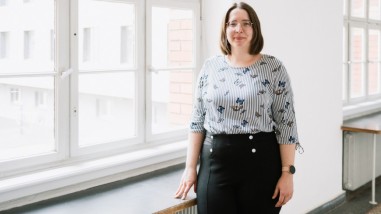
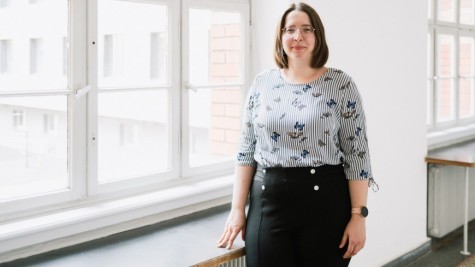
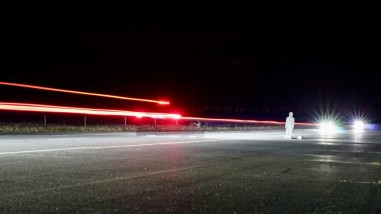
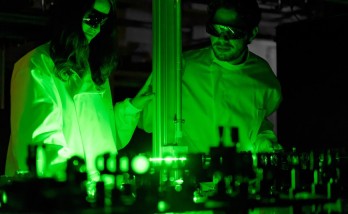
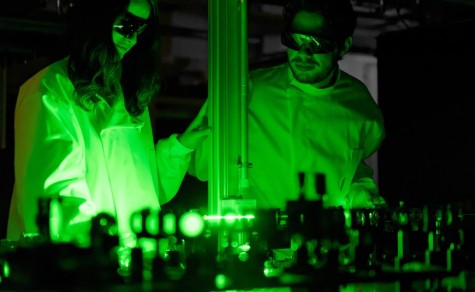
How does light influence plant growth? This question is at the center of an international collaboration at the ALSVV research group in the Department of Electrical Engineering and Information Technology at TU Darmstadt. Together with researchers from Vietnam, the team led by Professor Tran Quoc Khanh is investigating innovative LED technologies aimed at enabling sustainable plant production.
-
![]() Picture: Paul Abendschein
Picture: Paul Abendschein![]() Picture: Paul Abendschein
Picture: Paul Abendschein“An exciting and varied combination”
2025/10/21
Doctoral student Theresa Nolte on her medical technology studies – fifth and final part of a series
While searching for an application-oriented engineering degree programme, Theresa Nolte came across medical technology. In this interview, the 27-year-old, who graduated in 2024, talks about what particularly motivated and surprised her during her studies.
-
![]() Picture: Paul Abendschein
Picture: Paul Abendschein![]() Picture: Paul Abendschein
Picture: Paul Abendschein‘The Path to One of the Most Important Fields of Research of Our Time’
2025/10/14
Doctoral student Phil Reize on his studies in medical technology – part four of a five-part series
For Phil Reize, the medical technology degree programme brought together two of his interests: electrical engineering and medicine. In this interview, the 24-year-old, who graduated in October 2023, looks back on his studies – and gives first-year students an important tip.
-
![]() Picture: Paul Abendschein
Picture: Paul Abendschein![]() Picture: Paul Abendschein
Picture: Paul Abendschein‘Suddenly, you can communicate with each other’
2025/10/08
Graduate Ellen Bräuer on her medical technology studies – part three of a five-part series
Ellen Bräuer took up medical technology as a second degree rather by chance during her bachelor's studies and then switched to it completely for her master's degree. In this interview, the 33-year-old, who graduated in April 2024 and now works as a medical physicist, talks about her experiences – including the oddest ones.
-
![]() Picture: Lars Möller/TU Darmstadt/Universitätsmedizin Frankfurt
Picture: Lars Möller/TU Darmstadt/Universitätsmedizin Frankfurt![]() Picture: Lars Möller/TU Darmstadt/Universitätsmedizin Frankfurt
Picture: Lars Möller/TU Darmstadt/Universitätsmedizin Frankfurt‘Enriching the medicine of tomorrow’
2025/10/01
Interview with the Deans of Studies for the RMU joint degree programme “Medizintechnik” – part two of a five-part series
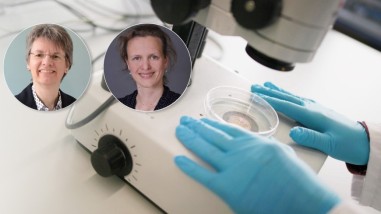
Together with Goethe University Frankfurt as a partner in the Rhine-Main Universities (RMU) alliance, TU Darmstadt has been offering the Medizintechnik programme since 2018. The two Deans of Studies, Anja Klein and Miriam Rüsseler, look back on the beginnings and venture a prediction for the future.
-
![]()
![]()
Medical Technology Degree Programme: Where Medicine Meets Engineering
2025/09/24
A degree programme offered by the strategic alliance of Rhine-Main Universities (RMU)
Engineering meets medicine: Nearly seven years ago, the joint Medizintechnik (Medical Technology) degree programme, offered by TU Darmstadt and Goethe University Frankfurt, was launched. Since then, 132 students have successfully completed the programme. A five-part series now shines a spotlight on this unique academic offering, the only one of its kind in the state of Hesse and part of the strategic alliance of the Rhine-Main Universities (RMU). The series begins with a video that provides a comprehensive overview of the field of medical technology.
-
![]() Picture: FG ALSVV
Picture: FG ALSVV![]() Picture: FG ALSVV
Picture: FG ALSVVMaking Road Traffic Safer with New Technologies
2025/09/22
Interview with Professor Tran Quoc Khanh on the Upcoming International Symposium on Automotive Lighting
Early next week, the 16th International Symposium on Automotive Lighting (ISAL) will kick off in Darmstadt, featuring 48 exhibitors and around 700 experts from research, industry, and regulatory bodies. They will come together for an intensive exchange on the latest findings in research and development.
-
![]()
![]()
LogiNet makes neural networks greener and more transparent
2025/09/04
Professor Grace Li Zhang awarded ERC Starting Grant
etit Professor Grace Li Zhang has been awarded a Starting Grant by the European Research Council (ERC) for her research project “LogiNet”. She will receive 1.5 million euros. LogiNet pursues a new approach to making neural networks – the heart of many artificial intelligence (AI) applications – more energy-efficient and transparent. LogiNet not only develops new solutions for green AI to benefit the economy and the environment but also lays the foundation for new directions such as logic-based DNN validation in the era of large-scale models that have started to influence our society fundamentally.
-
![]() Picture: Catharina Frank
Picture: Catharina Frank![]() Picture: Catharina Frank
Picture: Catharina FrankA Celebratory Farewell for Tomorrow’s Changemakers
2025/08/04
Graduation Ceremony of the Department of Electrical Engineering and Information Technology – Summer Semester 2025
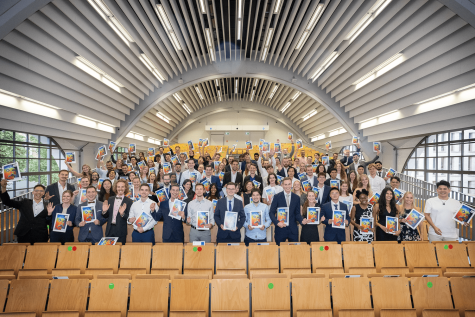
On July 25, 2025, the Department of Electrical Engineering and Information Technology (etit) at TU Darmstadt held a festive ceremony to bid farewell to its graduates of the summer semester 2025. The event took place in a fully packed hall—joined by family members, friends, lecturers, and companions.
-
![]() Picture: TU Darmstadt / Fachgebiet Biophotonik
Picture: TU Darmstadt / Fachgebiet Biophotonik![]() Picture: TU Darmstadt / Fachgebiet Biophotonik
Picture: TU Darmstadt / Fachgebiet BiophotonikCutting-edge technology for the paediatric cancer ward
2025/07/29
MultiDrug-TDM: New LOEWE research cluster for medical technology
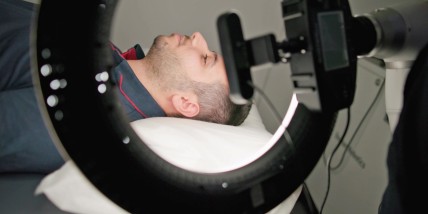
The new LOEWE research cluster ‘MultiDrug-TDM’, coordinated by TU Darmstadt, will receive 4.3 million euros state funding for four years, starting in January. The goal is to research a novel, intelligent sensor system to significantly improve paediatric cancer care. By measuring drug levels directly at the bedside, immediate adjustments and thus optimised personalized therapy will be possible.
-
![]() Picture: Patrick Bal
Picture: Patrick Bal![]() Picture: Patrick Bal
Picture: Patrick BalNew at TU: Professor Dirk Hartmann
2025/07/21
On 1 July, Dirk Hartmann joined the Department of Electrical Engineering and Information Technology as a cooperation professor for the research area ‘Digital Twins’. The 47-year-old scientist, who completed his doctorate at the University of Heidelberg and worked there as a junior research group leader at the Institute for Scientific Computing, has had an expert career with various management roles at Siemens AG. He currently heads the technology innovation team for the simulation products of Siemens Digital Industrie Software.
-
![]() Picture: Patrick Bal
Picture: Patrick Bal![]() Picture: Patrick Bal
Picture: Patrick BalNew at TU: Professor Yvonne Späck-Leigsnering
2025/07/11
Since July 1, Yvonne Späck-Leigsnering has been a cooperation professor for “Computational Electromagnetic Compatibility” at the Department of Electrical and Information Engineering. The scientist, who earned her doctorate from TU Darmstadt in 2019, has been leading the independent junior research group “Quasistatics in Computational Engineering (QuinCE)” at the TU's “Electromagnetic Field Theory (EMFT)” department since 2022. Additionally, she has been heading the simulation team in the ME/EMC division of Robert Bosch GmbH since 2023.
-
![]() Picture: Paul Glokowski
Picture: Paul Glokowski![]() Picture: Paul Glokowski
Picture: Paul GlokowskiNew at TU Darmstadt: Professor Holger Maune
2025/07/04
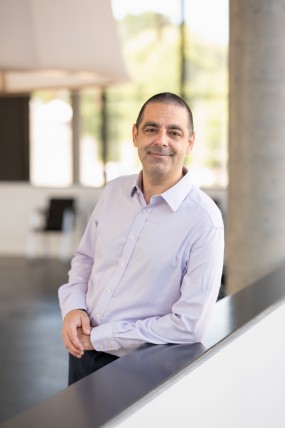
Since July 1st, Holger Maune has been a Professor of High-Frequency Engineering at the Department of Electrical Engineering and Information Technology at TU Darmstadt. The 43-year-old completed his doctoral studies at TU Darmstadt in 2011 and subsequently worked as a Postdoctoral Researcher at the Institute of Microwave Engineering and Photonics. In 2020, he habilitated in the field of High-Frequency Engineering at TU Darmstadt. Most recently, he held the position of Professor of High-Frequency and Communication Engineering at Otto von Guericke University Magdeburg since 2021. In an interview, he shares what particularly attracts him to return to TU Darmstadt and the challenges he anticipates in his new role.
-
![]() Picture: Mathias Daum - Fotografie MD
Picture: Mathias Daum - Fotografie MD![]() Picture: Mathias Daum - Fotografie MD
Picture: Mathias Daum - Fotografie MDLOEWE top professorship: Professor Koeppl researches synthetic biology and AI
2025/06/27
State programme provides around three million euros
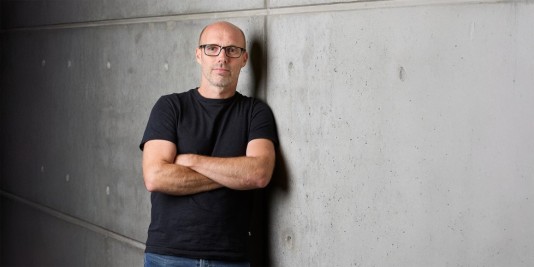
Professor Heinz Koeppl has been awarded a LOEWE top professorship at TU Darmstadt. He is investigating how artificial intelligence (AI) can improve the design of new biomolecules and genetic circuits in synthetic biology. The state is providing around three million euros from LOEWE funds over a total of five years.

Department of Electrical Engineering and Information Technology
News from the Department etit
Archive











Contact
Kommunikation etit

kommunikation@etit.tu-...
work +49 6151 16-20208
Work
S3|21 104
Fraunhoferstraße 4
64283
Darmstadt